


Line Up: Draw the Criminal
4.45.86K Reviews
App Specs
- Version
- 1.8.3
- Updated On
- License
- Free
- Downloads
- 10,000,000+
- Developer
- Kwalee Ltd
- Categories
- Casual
- Platform
- Android, iOS
Screenshots
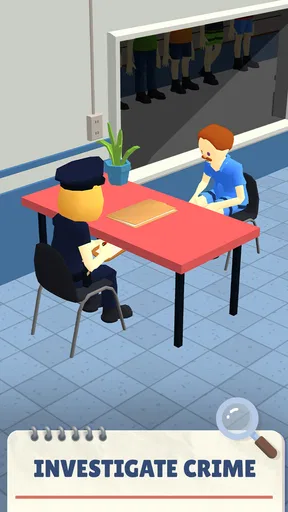
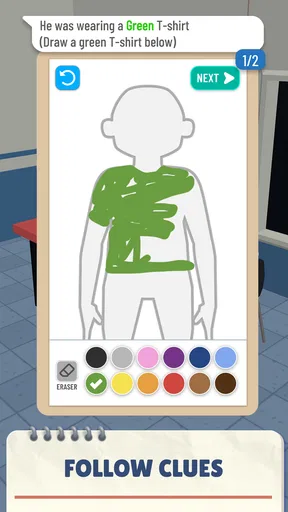
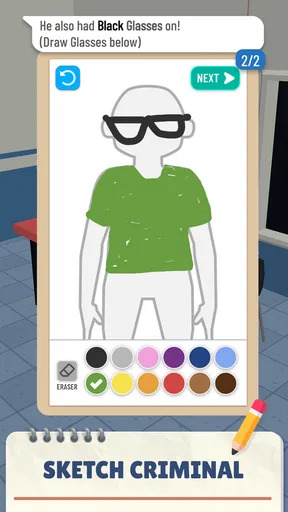


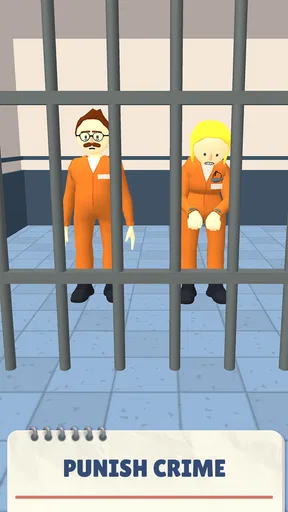
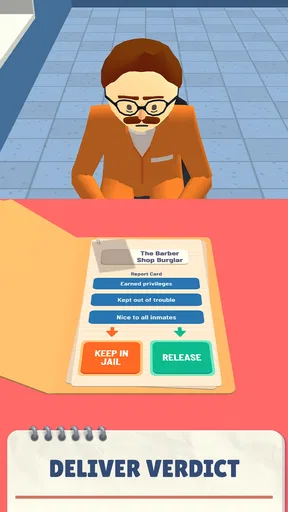
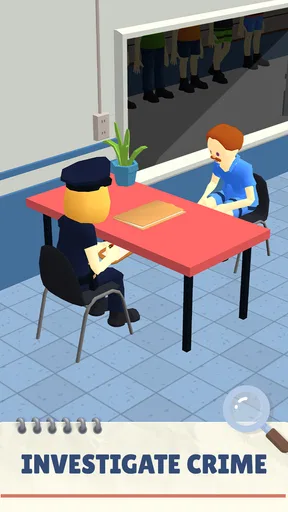
 Analysis by AppCompare
Some mobile games ask for long sessions, complicated controls, or a steady supply of patience. Line Up: Draw the Criminal takes a much simpler route: I look at a clue, draw or adjust a suspect’s appearance, and try to identify the culprit. That basic idea makes it easy to start, but the real appeal comes from the quick cycle of action, judgment, reward, and another attempt.
After spending time with it, I see this as a casual game for short breaks rather than a deep detective simulator. It is free to play, aimed at Everyone, and developed by Kwalee Ltd. The concept is immediately understandable, which matters when I want something I can open without remembering a complicated story or control scheme.
The game has also found a sizeable audience, with more than ten million installs and an average rating of 4.4 from roughly 242 thousand ratings. Those figures do not turn a simple game into a masterpiece, but they do reflect how accessible its central idea is. I can pick it up for a few minutes, complete a small challenge, and put it down without losing my place in a long campaign.
How the draw-and-judge loop works
I’ll focus on how the clue, drawing choice, and verdict fit together, including why a brief pause to identify the clue’s defining feature can be more useful than sketching quickly. That decision-making rhythm also sets up a closer look at how the game’s quick feedback shapes the experience.
The first action is simple, but not entirely mindless
The opening move is the most important part of the experience: I study the available clue and try to translate it into a face or physical detail. The challenge is not about controlling a character through a level. It is about noticing what the case is asking for and making a visual decision quickly.
That makes the game feel different from ordinary matching games. I am not merely tapping the identical shape from a grid. I am interpreting a description and turning it into a suspect. Even when the answer seems obvious, there is a small moment of uncertainty before I commit. Did I notice the right feature? Did I draw it clearly enough? Is the game expecting a broad resemblance or a more exact detail?
This is where the title’s drawing focus becomes useful. The action feels active without being demanding. I am doing something with the clue instead of simply selecting a menu option, but the controls remain approachable enough for casual play. I would not describe the drawing as a full creative tool; it exists to support the investigation loop, not to let me make elaborate artwork.
Worth Reading Before You Choose

EA SPORTS FC Mobile 26 Is a Bigger Football Game, but It Takes Time

Flipboard Shows What News Apps Must Do Beyond the Feed

Switching to Android Auto Means Rethinking Your Driving Routine

Google Calendar Makes a Crowded Week Easier to Manage

Ludo King Makes the Most of the Minutes Between Plans

Baby Panda World Brings Quick Play to Modern Phones, but Its Game Library Feels Busy
One practical tip is to pause briefly before drawing. My first instinct was sometimes to react to the most noticeable part of a clue, but that can make me overlook the feature that actually separates one suspect from another. Taking a second to identify the defining detail makes the next decision more deliberate without slowing the game down.
Feedback arrives quickly and keeps the pace moving
The feedback rhythm is the strongest part of the design. I act, see how the result is judged, and immediately understand whether my interpretation worked. That short gap between drawing and feedback gives every case a small payoff. I do not have to wait through lengthy dialogue or a complicated investigation screen to know whether I made progress.
When the result is successful, the satisfaction comes from recognition rather than from a difficult control challenge. I connected the clue with the right visual choice, and the game confirmed it. When I make a mistake, the disappointment is limited because the attempt is brief. I can learn from the mismatch and move forward instead of feeling that I have wasted a long session.
This quick response also makes the game suitable for situations where my attention is divided, such as waiting for an appointment or taking a short break between tasks. I still need to look at the clue, so it is not something I would play safely while walking or doing another activity, but it does not demand the uninterrupted concentration of a strategy game or action title.
The trade-off is that the feedback can feel shallow if I am looking for a real detective explanation. The game tells me whether my action worked, but the pleasure is mainly in solving the visual prompt. Players who want evidence boards, branching interrogations, or a detailed reason behind every suspect may find the loop too light.
The reward encourages one more case
After a successful decision, the reward is not just the satisfaction of being correct. Progress itself creates a reason to continue. The game presents the next challenge before the feeling of completion has completely faded, so I often find myself thinking, “I will just solve one more.”
That is the clever part of the casual structure. Each case is small enough to feel harmless, but the sequence creates momentum. I am not committing to a long level or a major story chapter. I am accepting another compact puzzle. This is especially effective when I have a few spare minutes and want a clear endpoint that can still lead naturally into another round.
My advice is to treat the reward rhythm as a convenience rather than a challenge to complete everything in one sitting. The game works best when I stop while the loop still feels fresh. If I continue only because the next case is immediately available, the drawing and judging can start to feel repetitive.
Because the game is free, it is easy to try without making an initial purchase. There are in-app purchases ranging from $1.99 to $14.49 per item, so players who prefer a completely uninterrupted free experience should pay attention to how optional spending fits their habits. I did not need to spend money to understand the core appeal, but anyone sensitive to purchase prompts should decide in advance whether they want to ignore them or use them.
Resetting is part of the appeal
The reset after each case is almost invisible, and that is a strength. Once a suspect has been identified, the previous decision does not create a complicated burden for the next one. I get a fresh clue, a fresh visual problem, and another chance to make the right connection.
This reset keeps mistakes from becoming discouraging. In a longer puzzle game, one wrong choice can force me to retrace several steps. Here, the consequence is much smaller. I can take the result, adjust my approach, and try the next case. That makes it friendly to players who enjoy quick feedback but do not want punishing failure.
The downside is that the reset also limits emotional investment. I am not building a relationship with a cast of suspects or shaping a larger investigation. The cases function as individual moments inside a repeatable casual framework. For me, that is fine when I want a snack-sized game, but it would not replace a story-driven mystery game.
A useful way to play is to use the reset as a natural stopping point. Finish a case, decide whether you genuinely want another, and close the game if the answer is no. Since the next round is always tempting, setting that small personal boundary helps keep the experience relaxing instead of turning it into automatic scrolling with extra steps.
Where it fits among casual games
Compared with a standard match-three game, this title gives me more direct interaction with the prompt. I am not arranging colored pieces or waiting for a chain reaction; I am making a visual interpretation. Compared with hidden-object games, it is usually less about searching a crowded scene and more about converting a clue into a suspect detail.
It also sits apart from traditional drawing games. I am not being judged on artistic quality in the way I might be in a freeform sketching app. The drawing serves the investigation, so the important question is whether my action communicates the required characteristic. That makes it approachable for people who would avoid a game advertised around artistic skill.
On the other hand, players who prefer a strong sense of progression may find a puzzle adventure or a more structured mystery game more rewarding. Those alternatives generally offer deeper systems, longer-term goals, and more meaningful consequences. Line Up: Draw the Criminal is better when I want a compact interaction that resolves quickly, not when I want to spend an evening solving one elaborate case.
Everyday situations where it works well
I found the best use case during short waiting periods. If I have a few minutes before leaving the house, I can open the game, solve a case, and stop at a clean break. The action is more engaging than passively watching a feed, but it does not require me to remember a complicated objective from a previous session.
It can also work as a low-pressure wind-down game. The controls and cases are not intimidating, and a failed attempt does not feel like a major setback. I would still avoid playing when I need to keep my attention on a conversation or a task, because the clues require visual focus. But for a quiet pause, the short loop is convenient.
It is less suitable for a group that wants to compare detailed strategies. The decisions are personal and quick rather than built around a large set of possible solutions. It is also not my first choice for a long commute if I want one continuous experience, because the cases can begin to feel similar when played for too long.
Practical details before installing
The game is available as a free casual title from Kwalee Ltd, with an age rating of Everyone. It was released on June 18, 2020, and the current version is 1.8.3. Devices running Android 8.0 or later meet the stated minimum operating-system requirement.
Those details make it a straightforward recommendation for families and casual players who want an accessible premise. Still, the Everyone rating should not be mistaken for a guarantee that every person will enjoy the repetition. The subject is light, but the long-term appeal depends on whether drawing and identifying suspects remains entertaining after the novelty wears off.
The most important expectation to set is this: the game is about the repeated process, not about uncovering a richly developed criminal world. If I approach it as a quick visual puzzle, the structure makes sense. If I expect a full detective story, I am likely to be disappointed by the limited depth of each individual case.
My verdict on the complete loop
The action-feedback-reward-reset cycle is clear and effective. I read a clue, make a drawing-based decision, receive a quick response, enjoy a small sense of progress, and then face a new case. That sequence explains why another session begins so easily: the next challenge feels close, manageable, and independent from the last one.
Its best qualities are accessibility, speed, and the small creative twist added to a familiar casual format. The strongest non-obvious lesson from playing is that accuracy improves when I focus on the distinguishing feature rather than trying to make a complete or attractive drawing. The game rewards communication of the clue, not artistic perfection.
Its limitations are equally clear. The cases do not offer the depth of a serious mystery game, extended sessions can expose repetition, and players who dislike optional purchase prompts may prefer a paid game with a more fixed structure. I would also skip it if I want competitive play, a substantial narrative, or a puzzle that develops over many connected stages.
For everyone else, I think it is worth trying because the entry cost is low and the central idea is immediately understandable. I would recommend it to someone who enjoys casual games with a little interpretation and wants something that can be played in short bursts. I would not recommend treating it as a full detective adventure. Its real strength is the satisfying reset: each solved suspect closes one tiny task and makes the next one feel easy to begin.
In my experience, that balance is enough to make the game enjoyable in the right setting. It is a light, repeatable distraction with a distinctive drawing mechanic, not a game built for deep mastery. If that sounds like the kind of session you want, Line Up: Draw the Criminal earns a place on the casual-games list.
Pros
- Simple drawing mechanics make it easy to start playing immediately.
- Short cases are ideal for quick gaming sessions on mobile.
- Clues and suspect descriptions create satisfying deduction moments.
- Cartoon-style visuals keep the crime-solving theme light and accessible.
- Progression encourages players to improve their observation skills.
Cons
- Some cases may feel repetitive after extended play.
- Drawing accuracy can occasionally be affected by touch controls.
- The difficulty may be too low for experienced puzzle fans.
- Hints or mistakes may be tied to limited in-game resources.
- Ads can interrupt the flow between cases or attempts.
FAQs for Line Up: Draw the Criminal
What is Line Up: Draw the Criminal?
Line Up: Draw the Criminal is a casual puzzle and investigation game in which you help identify suspects by drawing or reconstructing their appearance from witness descriptions. Each case presents clues about details such as hairstyles, facial features, clothing, or accessories. You then compare the available characters and choose the person who best matches the evidence before moving on to the next scenario.
How do you play Line Up: Draw the Criminal?
The gameplay is built around observing clues carefully and creating a suspect that matches the description. Depending on the case, you may need to draw specific facial or physical details, arrange features, or select the correct person from a lineup. The controls are generally simple and designed for touchscreens, although accuracy and attention to small visual details become increasingly important in later levels.
Is Line Up: Draw the Criminal free to download and play?
Line Up: Draw the Criminal can generally be downloaded for free on supported mobile devices, but the free version may include advertising, optional purchases, or other limitations. Ads can appear between cases or after completing certain actions, while purchases may offer extra resources or remove advertising. Check the store listing for the current pricing, permissions, and in-app purchase information before installing.
Does Line Up: Draw the Criminal require an internet connection?
The game may allow some basic levels to be played without a constant internet connection, which is useful when traveling or when mobile data is unavailable. However, an online connection may still be required for advertisements, updates, analytics, cloud features, or certain content. Offline behavior can vary by device and version, so it is best to test the game after installation rather than assume every feature works offline.
Is Line Up: Draw the Criminal suitable for children?
Line Up: Draw the Criminal uses a light, cartoon-style presentation rather than realistic crime-scene imagery, making it more approachable than many serious detective games. Nevertheless, its central theme involves criminals, suspects, and investigations, and advertising or in-app purchases may also be present. Parents should review the age rating, store disclosures, and available device restrictions before allowing younger children to play.


